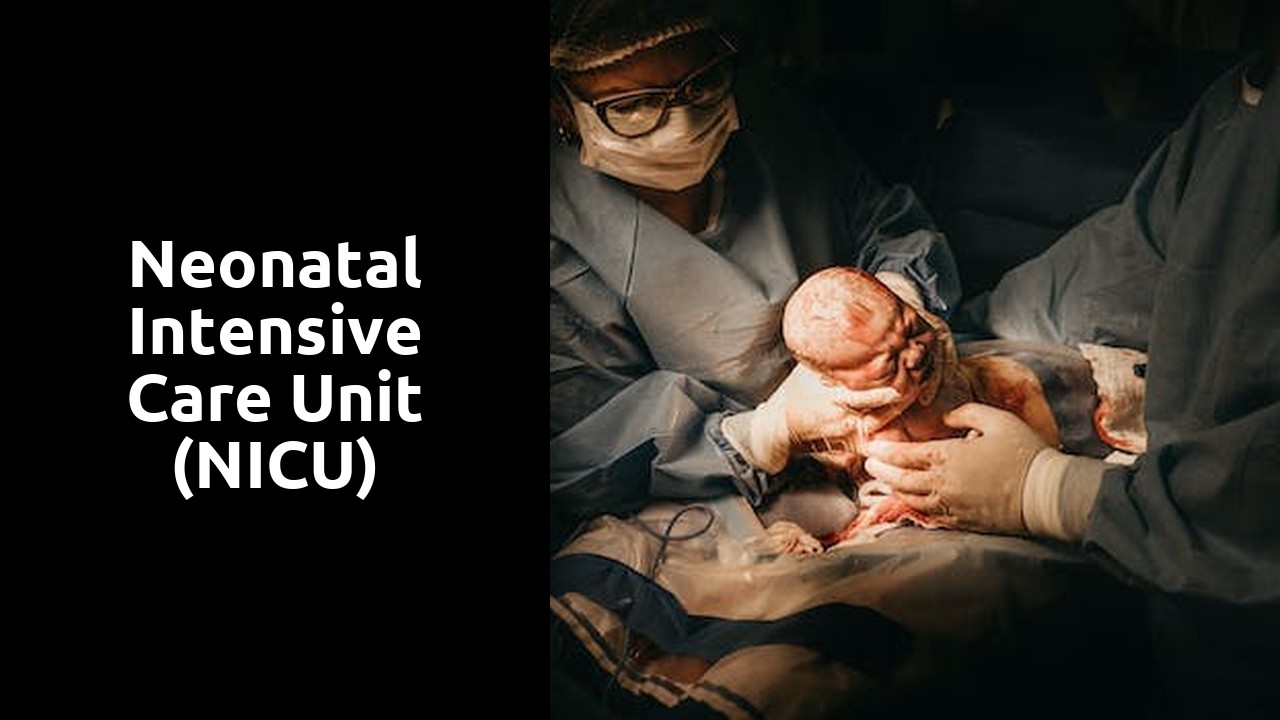
Neonatal Intensive Care Unit (NICU)
Understanding the Critical Role of NICUs in Newborn Care
NICUs, or Neonatal Intensive Care Units, play a critical role in providing specialized medical care to newborn babies who require intensive interventions and monitoring. These units are equipped with state-of-the-art technology and staffed with highly trained healthcare professionals who are skilled in caring for fragile infants. NICUs are specifically designed to offer round-the-clock medical attention, personalized treatments, and a controlled environment to support the development and well-being of newborns who are critically ill, premature, or have a medical condition that requires specialized care.
One of the key aspects of NICUs is their ability to provide constant monitoring and intervention to address any potential complications that may arise. With advanced medical equipment, such as ventilators, incubators, and cardiac monitors, NICUs can closely track vital signs, manage respiratory distress, maintain stable body temperature, and ensure adequate nutrition for each baby. This level of monitoring, combined with specialized treatments and therapies, helps to improve outcomes and give these vulnerable newborns the best chance of survival and thriving. The dedication and expertise of the healthcare professionals in NICUs are instrumental in providing individualized care and making critical medical decisions to support the unique needs of each fragile infant.
Common Medical Conditions Treated in NICUs
Jaundice
Jaundice is a common medical condition treated in neonatal intensive care units (NICUs). It occurs when there is an excessive buildup of bilirubin, a yellow pigment, in the baby's blood. This can cause the baby's skin and eyes to turn yellow. While jaundice is a normal response in many newborns, severe cases require medical intervention. In the NICU, babies with jaundice are closely monitored, and treatment may include phototherapy, where the baby is placed under special lights to help break down the excess bilirubin. Additionally, the baby's feeding may be closely regulated, and in more severe cases, a blood transfusion may be necessary to manage the condition.
Respiratory Distress Syndrome (RDS)
Respiratory Distress Syndrome (RDS) is another common medical condition seen in NICUs. It primarily affects premature babies with underdeveloped lungs. Babies with RDS typically have difficulty breathing and may need assistance to deliver oxygen to their lungs. In the NICU, newborns with RDS are often placed on respiratory support, such as a ventilator or continuous positive airway pressure (CPAP) machine, to help them breathe more effectively. Additionally, surfactant therapy, which involves administering a natural substance to the baby's lungs, may be used to improve lung function. Close monitoring of oxygen levels and respiratory rate is crucial in managing RDS and ensuring the baby's overall well-being.
The Importance of Specialized Care for Premature Babies
Premature babies, often referred to as preemies, require specialized care due to their unique medical needs. These tiny infants, born before the completion of 37 weeks of gestation, have underdeveloped organs that require close monitoring and intervention. The importance of specialized care for premature babies cannot be overstated, as it can significantly impact their chances of survival and long-term healthy development.
One key aspect of specialized care for preemies is the management of their respiratory function. Premature babies often have immature lungs that struggle to function effectively. They may require assistance from mechanical ventilators or other respiratory support devices to ensure an adequate oxygen supply and proper carbon dioxide removal. Additionally, preemies may be prone to developing respiratory distress syndrome, a condition characterized by difficulty in breathing, which further emphasizes the need for close monitoring and specialized interventions. The delicate balance of managing respiratory function in premature babies can be achieved through the expertise of neonatologists and respiratory therapists who work collaboratively to optimize their care.
Exploring the Equipment and Technology Used in NICUs
In today's modern healthcare system, Neonatal Intensive Care Units (NICUs) are equipped with a wide range of advanced equipment and technology. These tools play a crucial role in providing specialized care to newborns in critical condition. One of the most essential pieces of equipment found in NICUs is the incubator. These specially designed units provide a controlled environment that helps regulate temperature, humidity, and oxygen levels, creating an optimal environment for the baby's growth and development. Additionally, incubators also offer protection from external factors such as noise and infections, ensuring that the fragile infants receive the necessary care and attention they need.
Another key technology seen in NICUs are ventilators. These machines help infants who have difficulty breathing or require assistance with their respiratory function. Ventilators deliver a carefully controlled mix of air and oxygen, helping to maintain the baby's oxygen levels and remove carbon dioxide from their system. Alongside ventilators, continuous positive airway pressure (CPAP) machines are also commonly used in NICUs. CPAP helps in providing a steady stream of air pressure to the baby's lungs, preventing the airways from collapsing and improving overall respiratory function. These technologies, along with many others, emphasize the vital role that equipment plays in the care and treatment of newborns in the NICU.
The Role of NICU Nurses and Healthcare Professionals
NICU nurses and healthcare professionals play a pivotal role in providing care and support to newborns in the neonatal intensive care unit. These dedicated individuals possess specialized skills and knowledge to handle the unique challenges faced by premature and critically ill babies. They work tirelessly to ensure the well-being and safety of these fragile infants, monitoring their vital signs, administering medications, and conducting various medical procedures.
In addition to their medical expertise, NICU nurses and healthcare professionals also serve as a source of emotional support for both the babies and their families. They create a nurturing environment by comforting and soothing the babies, often through gentle touch or by mimicking the womb environment. Moreover, they communicate regularly with the families, keeping them informed about their baby's progress, and providing guidance and reassurance during what can be an emotionally challenging time. The dedication, compassion, and expertise of NICU nurses and healthcare professionals greatly contribute to the positive outcomes and overall well-being of the newborns in their care.
Supporting Families in the NICU: Emotional and Practical Considerations
One of the most important aspects of caring for families in the NICU is providing emotional support. The experience of having a baby in the NICU can be overwhelming and stressful for parents, and it is crucial for healthcare professionals to acknowledge and validate their feelings. Many parents in the NICU may experience feelings of guilt, fear, and sadness, and it is important to offer them a safe space to express their emotions and seek reassurance. Additionally, healthcare providers can provide resources and education to help parents better understand their baby's condition and treatment plan, which can help alleviate some of their anxiety and uncertainty.
In addition to emotional support, practical considerations are also essential in supporting families in the NICU. Parents often spend long hours at the hospital, away from the comfort of their homes. Providing accommodations such as resting areas, showers, and meal facilities can greatly alleviate the burden of staying at the hospital for extended periods. Moreover, facilitating communication and involvement in their baby's care, such as actively involving parents in caregiving tasks and providing regular updates on their baby's progress, can empower parents and help them feel more connected to their baby's journey. Furthermore, offering practical guidance on topics such as breast pumping, kangaroo care, and transitioning to home care can give parents the confidence and knowledge they need to care for their baby once they are discharged from the NICU.
Served areas in New York:
YonkersWhite Plains
New Rochelle
Mount Vernon
Scarsdale
Bronxville
Pelham
Larchmont
Rye
Mamaroneck
Harrison
Port Chester
Eastchester
Tuckahoe
Sleepy Hollow
Irvington
Dobbs Ferry
Ardsley
Hastings-on-Hudson
Elmsford
Briarcliff Manor
Ossining
Croton-on-Hudson
Peekskill
Yorktown Heights
Cortlandt Manor
Mount Kisco
Chappaqua
Pleasantville
Hawthorne
Valhalla
Thornwood
North Castle
Armonk
Served areas in New Jersey:
Jersey CityNewark
Paterson
Elizabeth
Edison
Woodbridge
Lakewood
Toms River
Hamilton
Trenton
Clifton
Camden
Cherry Hill
Passaic
Union City
Bayonne
Old Bridge
Middletown
Franklin Township
Irvington
Wayne
Parsippany-Troy Hills
Howell
Perth Amboy
Hoboken
Plainfield
West New York
Hackensack
Sayreville
Vineland
East Brunswick
North Bergen
New Brunswick
Jackson
Wayne
Union
Bloomfield
Bridgewater
Evesham
South Brunswick
Egg Harbor
Hillsborough
Gloucester Township
North Brunswick
Mount Laurel
Kearny
Linden
Teaneck
Winslow
Cherry Hill
Manalapan
Rockaway
Westfield
Hoboken
Hackensack
Sayreville
Lindenwold
Atlantic City
Montclair
Belleville
Pennsauken
Ewing
Fort Lee
Willingboro
Long Branch
Garfield